
Describe the condition
The useful roofing question is what failed and what must be repaired. Existing wear or an unrelated leak should not be turned into a storm claim by assumption.
Belton, MO
Loose shingles or a leak after a storm calls for an assessment of your roof. We separate the immediate opening from the permanent work the damaged system needs.
Free roof inspections. Repair and replacement options explained.
Wind can lift and crease shingles, disturb ridge caps and expose layers underneath. Hail can damage the shingle surface and mat without leaving an obvious opening from the yard. These are different kinds of damage, and the repair depends on what is actually present.
A reported storm nearby gives context and a date to discuss. It does not establish damage at your address or assign every mark on a roof to that event. Roof condition, property history and event evidence need to fit together.
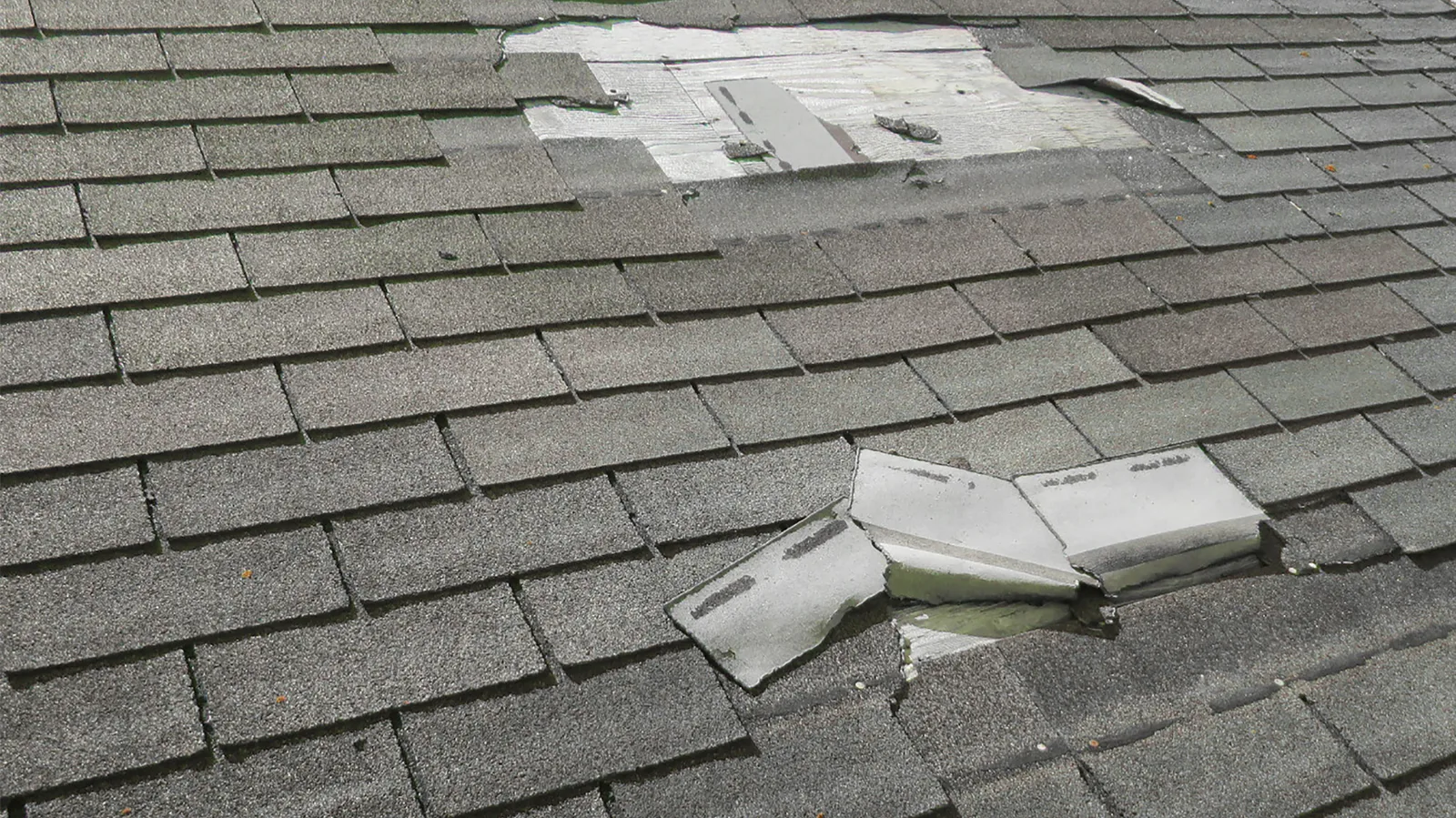
The work can move from short-term protection to a contained repair or a full replacement, depending on the condition.
Temporary covering can reduce further water entry when conditions allow safe access. It is an interim measure, not a completed roofing repair or a promised response time.
Shingles, ridge pieces or flashing can be renewed when the adjoining material and deck support a sound connection. Brittle or incompatible surrounding roofing can expand the required work.
Widespread covering damage or unsound underlying layers can call for replacement. Removal exposes the deck and lets the water-protection and flashing details be addressed together.
The roofing assessment explains damage and the physical repair. A claim follows its own policy and insurer process.
The useful roofing question is what failed and what must be repaired. Existing wear or an unrelated leak should not be turned into a storm claim by assumption.
Deductibles, depreciation and covered causes depend on the policy. A roof recommendation is not a coverage decision or a promise of full replacement payment.
A cover, a permanent repair and interior restoration serve different purposes. The actual scope should identify which work is included and which needs separate attention.
Visible changes such as missing or creased shingles are a useful reason to have the roof assessed. Damage does not have to create an immediate interior drip, and an absence of a leak does not diagnose the roof.
No. The affected material, damage extent and ability to integrate sound repairs determine the roofing scope. Insurance coverage is a separate decision.
Call and say that the leak is active. Stay clear of sagging ceilings and wet electrical equipment. Temporary protection is considered according to the weather and safe access.
Belton Roofing Co
Tell us what changed and roughly when you noticed it. Start with a free inspection of the actual roof.
(816) 281-0663