
Find the water path
We start with what you noticed and inspect the exterior details that could feed it. Safe access and weather determine how the roof is reached.
Belton, MO
A small opening can send water a long way through a roof. We trace the entry point, check the material around it and explain the work that will reconnect the roof properly.
Free roof inspections. Repair and replacement options explained.
Water follows the roof slope, the underside of decking and framing before it shows up indoors. The brown ring in a bedroom tells us where water arrived. It doesn’t reliably mark the opening in the roof.
We follow that path toward the weather-facing details: pipe boots, roof-to-wall flashing, valleys, roof edges and damaged covering. A split boot can channel rain down a pipe. A pulled-away counterflashing can expose the joint beside a chimney. Treating the ceiling mark or coating the nearest shingle leaves the source unresolved.
The repair needs to restore the way the roof sheds water. That can mean lifting or removing adjacent material, replacing failed components and integrating new work with sound existing underlayment and flashing. The size of the visible spot is only part of the job.
Flashing and roof transitions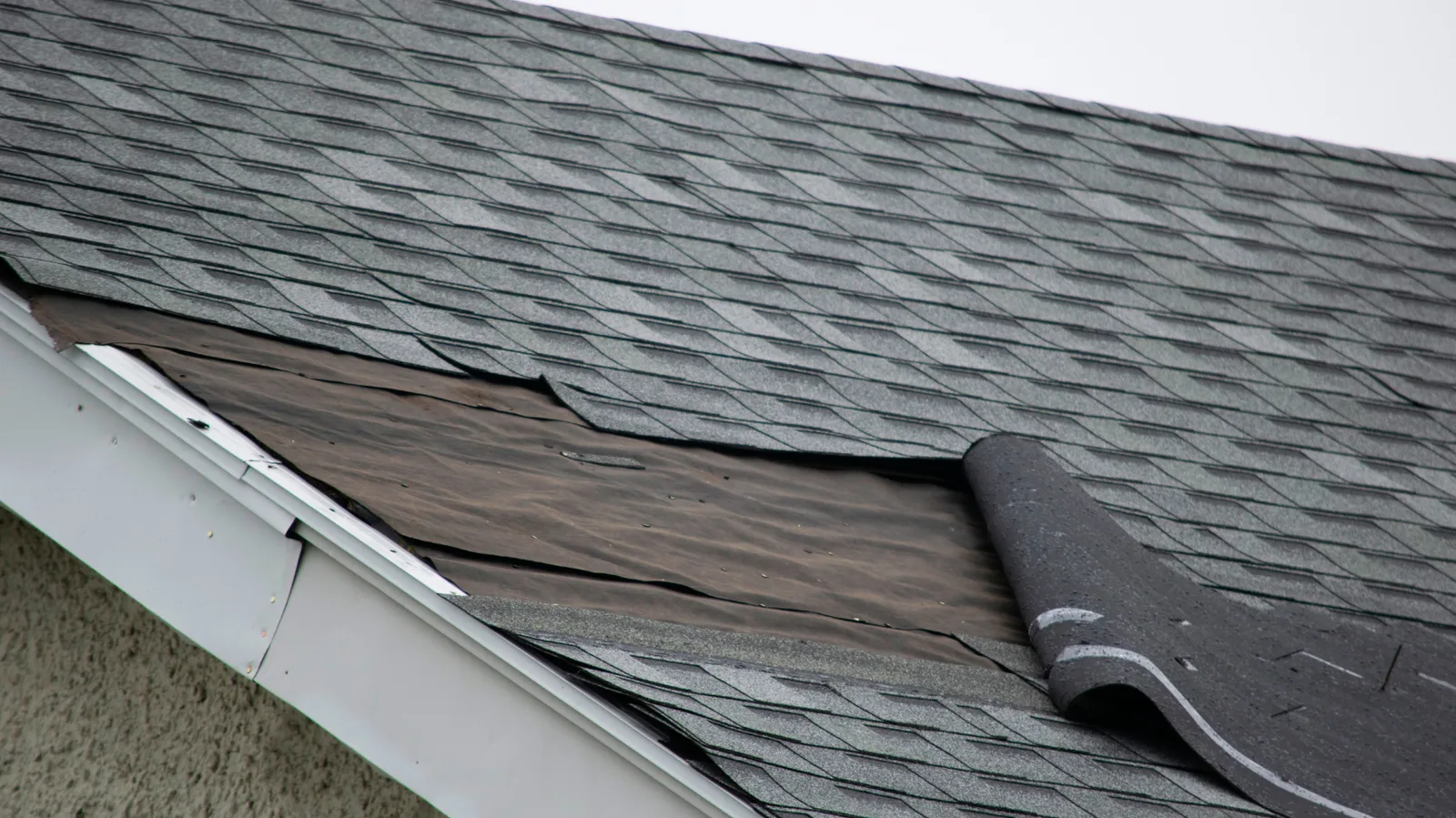
Different failures call for different physical repairs. A lasting connection matters more than the size of a patch.
Affected shingles are removed and compatible material is integrated with the courses around them. Fasteners and seals need the right placement. Brittle adjoining shingles that break during the work can expand the repair area.
A cracked boot opens a path around the pipe. The replacement must fit the penetration and tie into the surrounding roof layers. Smearing sealant across a split rubber collar does not renew the failed component.
Flashing directs water around a joint or down a roof intersection. A repair can involve opening the covering and part of the wall transition so overlaps direct water outward instead of trapping it behind the metal.
Wet or unsound decking needs attention before the surface is closed. A sound-looking shingle over a failing base is not a complete roof repair. The opened area sometimes reveals work that could not be seen beforehand.
A roof can have a repairable fault without being ready for replacement. It can also have a small leak that exposes a larger material problem.
| Condition | Repair path | What changes the decision |
|---|---|---|
| One failed boot or flashing joint | Renew the component and integrate it with sound surrounding roofing. | The adjoining covering cannot be lifted or reconnected without breaking. |
| A contained damaged shingle area | Replace the damaged courses and restore the underlying layers. | Widespread brittle shingles or a larger unsound deck area. |
| Repeated leaks in different places | Inspect the whole roof and identify whether failures share a cause. | A growing repair scope can make replacing the worn assembly more useful. |
A small visible defect does not always mean a simple repair. The price follows the access, affected layers and work needed to restore the detail.
A useful roofing estimate
Steep slopes, multiple stories and complicated transitions affect safe setup and the time needed to reach the work.
Matching profile and size, finding a compatible product and opening enough adjoining covering affect the repair. A color difference alone is an appearance question; a poor material connection is a performance problem.
Decking, wall damage or an equipment issue can add separate work. The repair conversation needs to explain what has been found and how it changes the original scope.
The asphalt replacement calculator is not a roof-repair price model.
The aim is to correct the entry point and leave a sound tie-in to the existing roof.
We start with what you noticed and inspect the exterior details that could feed it. Safe access and weather determine how the roof is reached.
Enough material is exposed to assess the failed part and the layers beneath. An underlying problem can change how far the repair needs to go.
The damaged component is renewed, the water-shedding overlaps restored and compatible surrounding material reinstalled or replaced.
Yes, when the failure is contained and the surrounding covering, deck and flashing can support a lasting repair. Widespread material failure or hidden damage can make replacement the better scope.
Sealant has a role in compatible details, but it cannot replace a missing metal overlap or renew a failed roof-to-wall assembly. The roofer checks the connection rather than assuming a surface bead will solve the leak.
Keep clear of wet electrical items and sagging ceilings. Protect belongings only from a safe location, then call and say the leak is active. Temporary protection depends on conditions and safe access; permanent repair is a separate step.
Belton Roofing Co
Tell us where water is showing up or what roofing has changed. Request a free roof inspection in Belton.
(816) 281-0663